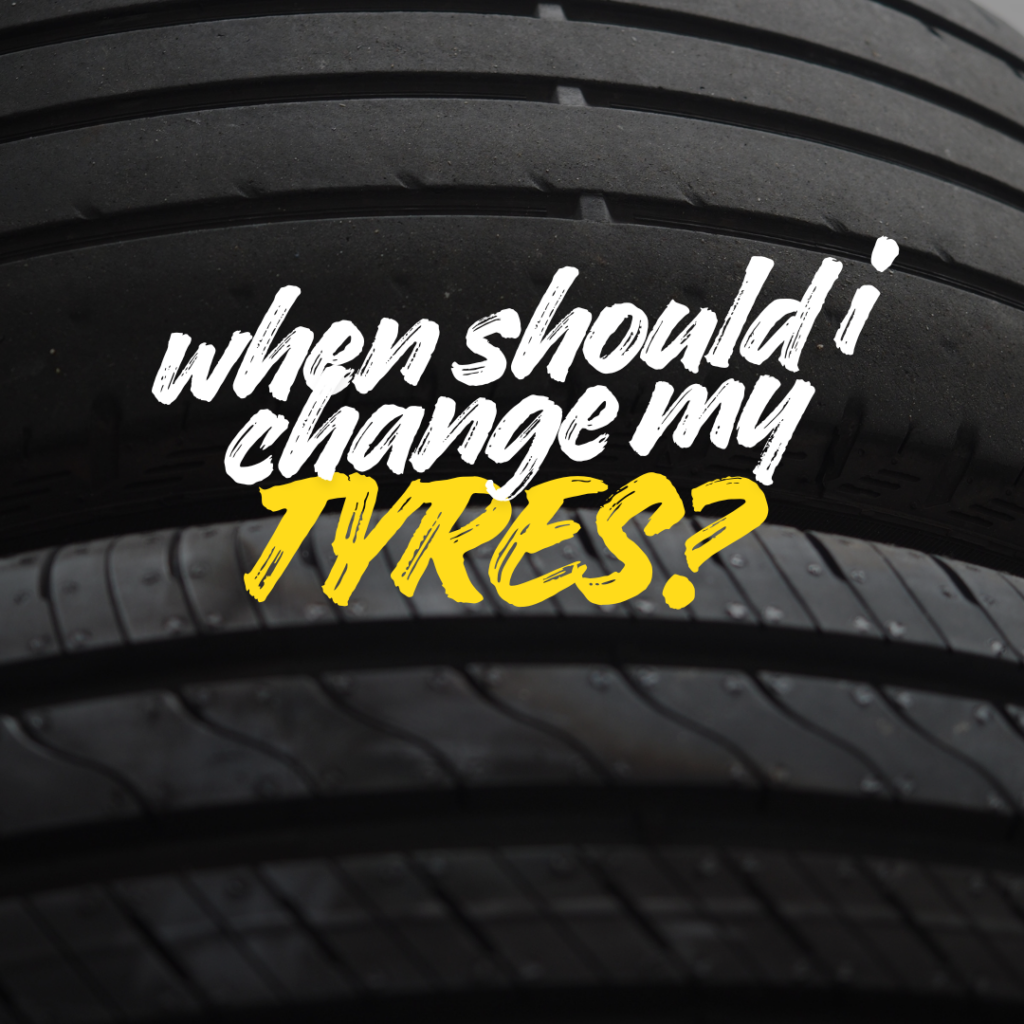
these are the few points to look at
-
Tyre Tread
With lower tread depth, the ability to grip especially on a wet road is deeply affected, braking distances increases making it unsafe and prone to accident.
Singapore’s Land Transport Authority (LTA) legally requires tires to be replaced when they reach a tread depth of 1.6mm, you can also refer to the tread wear indicator bars on your tyres (if the tread is flushed with the indicator it is definitely time to change your tyres)

As tread depths fall from 9mm to 4mm, braking distances rises by just 20%*, a fall in tread depths increases braking distances dramatically.Therefore it is recommended to change before the tread depth fall to the 3mm mark.
DONT FORGET
always remember to look at the enture tyre including the outer and inner tread (image below)
*According to data from National Highway Traffic Safety Administration (NHSTA)
-
DAMAGE TYRES
Tyres are on road and you cant avoid ie. road conditions, foreign objects which can caused cuts and tears(image below) ,Tyres could also get damage by hitting kerbs, driving fast thru portholes, such impact can cause individual cords to break due to overstressed and damaged to the tyre internal construction with a bulge showing
you can be the caused of damaged tyres too
how? > when you drive with a flat tyres
Tyre shaving (shaving of the tyres can be seen inside of the tyres once dismantle indicating sidewall damage); this is especially common when driving a flat or underinflated tyres (please do not do that ,besides damaging the tyre itself, it can also damage your wheels, TPMS sensors, and place unnecessary stress on other parts of your car.)
-
TYRE AGE (ON ROAD)
NOT YOUR TYRES YEAR OF MADE
Tyres are made from rubber, and like all rubber products, they naturally deteriorate over time. Unless a tyre is completely unused and stored in a cool, dry environment away from direct sunlight, heat, and ozone exposure, the ageing process will gradually occur.
As tyres age, the rubber can oxidise and harden, causing it to lose some of its elasticity. Over time, this may lead to the development of small hairline cracks, which can become more noticeable as the tyre continues to age.
Even if a tyre still has sufficient tread depth remaining, age-related deterioration may affect its overall performance and safety. Based on our experience in Singapore’s climate, we generally recommend having tyres inspected regularly after around 3 years of use, and considering replacement between 3 to 4 years depending on factors such as usage, mileage, storage conditions, and the overall condition of the tyre. Vehicles that are frequently parked under shelter may experience slower ageing compared to those regularly exposed to direct sunlight and heat.
Ultimately, the condition of the tyre is more important than its age alone, and each tyre should be assessed individually.
-
TYRE PERFORMANCE
When your tyres are not performing as expected, it could be you felt that it does not grip well anymore? This is also a sign that you require new tyres.As all the previous mentioned (worn,harden)can caused a tyres to underperform and does not provide. as much grip.
Conclusion On average, tyres in Singapore last about 30,000 to 40,000 km with regular rotation, or roughly 3 years on local roads. Don’t leave it to guesswork , tyres are critical as they’re the only contact point between your car and the road. To stay safe and avoid unnecessary wear, make an appointment with us for a quick tyre health check today.